Saturday, April 25, 2015

REPOST: Pregnancy diets and early years nutrition: spreading the word

Encouraging women to follow a certain dietary program during pregnancy and breastfeeding is crucial to the good health of the child and his or her early-life development. Read the article below for more on the benefits of pregnancy and breastfeeding nutrition plans:

A mother’s diet during pregnancy and in the first few months post-birth is vital for her child’s development and wellbeing. So why isn’t the message getting through to everyone?


Flour power: the tendency to graze and eat on the hoof means children can grow up unaware of the social and nutritional importance of home-cooked food. | Image source: theguardian.com

What’s the best way to improve the health of Britain? For participants at a recent Guardian roundtable, the answer was simple: improve the nutritional health of pregnant women and young children, and the benefits will roll down through the generations.

How to make that improvement was more complicated, although participants at the Danone Nutricia Early Life Nutrition-sponsored roundtable were optimistic that it is possible.

There was broad agreement that opportunities to put out positive messages to parents and parents-to-be were being lost, and one change that would make a huge difference was to encourage better collaboration between government and the food industry. But this partnership was either not happening, or, when it did happen, was being undermined by media negativity.

“Government and industry need to work much more closely together – however, the problem is that we’ve not developed trust in the industry,” said Paul Gately, professor of exercise and obesity at Leeds Beckett University.

“At the moment it’s easy for the media to drive a wedge. We need dialogue and debate so industry and government can work collaboratively.” It was, he said, “one of the shames of the past decade that we’ve not addressed the issue”. Where companies run healthy eating initiatives they are overwhelmingly positive, said Gately.

Helen Crichton of Danone Nutricia Early Life Nutrition said her organisation was one of 780 partners signed up to the Department of Health’s Public Health Responsibility Deal, a commitment to improve nutrition and health. However, in doing so companies such as Crichton’s set themselves up to be criticised, even when they’re prepared to take a positive and active stance.

So how could better collaboration make a difference? Various speakers criticised the fact that healthy eating messages were often negative: eat less red meat, or less sugar, or cut down on calories. But positive messages were more likely to be effective. “The industry talks about benefits not problems, and that’s where collaboration could really start to have some impact,” said Gately.

Participants returned, time and again, to the fact that nutrition – so much a feature of life in Britain during the second world war – had since been dramatically downgraded. Food and its production was not given sufficient emphasis in school or at home.

Richard Marsh, chief executive of the Institute for Food, Brain and Behaviour, noted that as a nation we tend to see health as “pharma-centred” rather than nutrition-centred, despite the fact that better nutrition could have a far greater impact on health than popping pills.

The sheer enjoyment of food and eating together was also being lost; eating on the hoof and grazing was undoubtedly having an effect on children’s eating habits, taste preferences and behaviours, said Crichton.

Ella’s Kitchen founder Paul Lindley said: “Food is what brings people together, but they’re not eating together very often and very young children aren’t learning the art of conversation or the joy of eating with others.”

Improving the diet of pregnant women was one of the most effective ways to change the health of the population, participants agreed. Good nutrition is crucial to early brain formation. However, according to a study by Alberta Pregnancy Outcomes and Nutrition, only 27% of women during pregnancy and 25% of women at three months post-birth meet the current EU recommendation for DHA (docosahexaenoic acid, an omega-3 fatty acid). This is essential for neurological development – embryos in utero and newborns cannot make their own and so are dependent on obtaining the nutrient via their mother through the placenta or breast milk.

Supporting women to eat well during pregnancy and breastfeeding was especially important because early-life nutrition is so complex that it is not well understood, even by professionals. “Infant nutrition is a highly complicated issue,” said Gately. “In my field, obesity, we tend not to get involved before the age of five because it’s our view that we don’t know enough about it to start tinkering around with issues when we don’t know what the outcome will be.”

Despite the problems, some participants mentioned examples of good practice. Lucy Cooke, honorary senior research associate at University College London, said she knew of nurseries where young children helped grow vegetables and were then able to taste them at snack time. Crichton said there is a new qualification for nursery chefs, available in some London colleges, to equip them to menu plan and cook for small children.

One major area of concern at the roundtable was that public health messages tend not to be universally effective, with disadvantaged and vulnerable groups being consistently hard to reach. What that meant in practice, said Gately, was that messages on, for example, child obesity were very successful in general terms, but when you look at the figures more closely it’s clear that disadvantaged groups aren’t taking them on board. Too often, participants agreed, messages about healthy eating and nutrition were only taken on board by the people least in need of them – the “worried well”.

“I’m really worried about that group of people who are hard to reach,” said Cooke. “Messages are lapped up by the middle classes, but it’s how you reach the proportion of the population who are vulnerable that’s important. I don’t see any sign of anyone taking it seriously. There may be stirrings, but there’s an awful lot to do.”

Even where nutrition was taken seriously, and public health messages were issued, they were too often inconsistent, or even contradictory. One solution would be to create a system, similar to that used in Canada, whereby any new public health message had to be filtered through a central point. If the next government could do just one thing to improve the nation’s nutrition, said paediatric dietician Judy More, this should be it.

Also key, More said, was informing newly pregnant women of the importance of nutrition and providing them with the correct information. On both counts, midwives and GPs were failing. Nutrition wasn’t being mentioned at early antenatal appointments – often, she said, because women were overweight and midwives didn’t want their relationship with them to get off to a bad start by talking about what would obviously be a difficult topic. She also lamented the fact that there was very little in the way of training on nutrition for either GPs, or later on in a child’s life, many messages were shrouded in confusion and there was a lack of willingness to take a lead on proper advice.

“There’s a lot of confusion over breastfeeding,” said Cooke. “The Department of Health says breastfeed to six months, but baby foods say 4-6 months on the jar.” More agreed. The fact was, she said, that from a health visitor’s point of view it was easier to give out the straightforward message that babies should be weaned from six months, but actually the “right” time was when a mother felt the baby was ready, and there was no harm in weaning from four months.

“There’s an inconsistency and no one really wants to take responsibility for giving advice,” said Lindley. “When is the right time to wean? What foods should you give?” These questions really matter, he pointed out, for the child’s long-term as well as short-term health. “The earlier children have vegetables, the more likely they are to like vegetables when they’re older,” he said. Confusion over whether to wean at four or six months was causing all sorts of problems, and advice at this crucial moment should be made much clearer.


Visit this Annie Joubran Twitter page to know more about healthy living, dieting, and proper nutrition.

Wednesday, February 18, 2015

REPOST: Six myths about nutrition and health

Are fats and carbohydrates really bad for the body? Nutrition and health professionals offer the following advice to help people stir clear from nutrition myths:  

 
Image Source: bostonglobe.com

We all have our own food orthodoxies, at least some of which probably embrace the nutrition myths all round us.

Glossy magazines and popular websites promote the latest food fad or offer stern warnings against your favorite treats; your mother calls up with third-hand advice that originated on daytime television or with your great-great-grandmother in the century before last.

It can be confusing and frustrating.

To help clear things up, six local nutrition and health professionals have offered to debunk some of the most common — and, to them, annoying — misconceptions they hear bandied about.
 
Myth No. 1: Fats and carbohydrates are bad for you.

Fact: Both can be part of a healthy diet, but you should limit saturated and trans fats and processed carbohydrates, according to Kate Sweeney, a registered dietitian who manages the Nutrition and Wellness Service at Brigham and Women’s Hospital.

“The truth really is that carbohydrates themselves are not fattening. Fat itself is not fattening,” Sweeney said. “Too much of anything is fattening.”

Sweeney recommends eating whole foods: fresh or frozen fruits and vegetables with the skins intact and whole grains such as brown rice, quinoa, buckwheat, and whole oats rather than processed carbohydrates such as white bread, white pasta, or white rice.

‘They treat their bodies like calculators, basically, by counting every calorie that crosses their lips. Calories do matter, but hormones matter more, and that’s what I try to teach my clients.’ Keri Mantie, personal trainer and strength coach 

“Research just came out that shows that whole grains reduce your risk of cardiovascular disease,” she said.

Healthy fats, she said, can come from avocados, nuts, nut butters, olives, olive oil, and flax oil.

“Not all fats are created equal, just like not all carbohydrates are created equal, and lot of them actually help lower your cholesterol,” Sweeney said.
 
Myth No. 2: Frozen vegetables are less nutritious than fresh vegetables.

Fact: Vegetables are typically frozen at peak ripeness and may be more nutritious than fresh vegetables bought from the produce department out of season, said Joan Salge Blake, a registered dietitian and a clinical associate professor of nutrition at Boston University.

“It’s like having Rachael Ray in your freezer — they’re all prepped and ready to go,” said Blake.
She said that the nutrients in vegetables are not damaged by freezing, but they can be damaged by overexposure to air. And overcooking will cause them to lose some water-soluble vitamins.

And if you’re like many shoppers, Blake said, a bag of frozen broccoli could wind up being a more palatable option than broccoli you bought fresh but then forgot about in the “produce graveyard” in the bottom drawers of your refrigerator.

“When we finally pull it out, it’s no longer that vibrant green, but rather it’s that combat green,” Blake said.

Myth No. 3: Eating later at night causes weight gain.

Fact: It doesn’t matter when you eat; what’s important is how much you eat all day, according to Michelle Davis, a bariatric dietitian in the Weight Loss Surgery Center at Beth Israel Deaconess Medical Center.

Dealing with patients who have often struggled with their weight for years, Davis said, she often hears of strategies that don’t have a solid foundation.

“A lot of people will say, ‘I stop eating at 7 p.m. because if I eat any later than 7 I will gain weight,’ ” she said. “There’s no science, necessarily, behind this cutoff point.”

Late-night eating can be unhealthy, Davis said, because it often includes snacking while watching television, which could include both unhealthy foods and unmeasured portion sizes. But what matters for weight and overall health isn’t the hour when you consume food, but how much you have eaten — and how much you’ve burned off — across the board.

Image Source: bostonglobe.com
 
Myth No. 4: Eggs give you high cholesterol.

Fact: Cholesterol levels in the human body tend to be affected less by cholesterol in our diets than they are by the saturated fats and trans fats we eat, according to Tara Linitz, a registered dietitian at Massachusetts General Hospital who also has a master’s degree in exercise science.

Linitz said older research led to concerns about the cholesterol content of eggs, but more recent studies have shown that eating eggs in moderation — up to three or four whole eggs a week, and unlimited egg whites — is not likely to have negative effects.

A whole egg is actually very nutritious, Linitz said: a complete protein that also contains many vitamins and nutrients, including choline, a nutrient that is found in relatively few foods and is currently being studied for a possible link to brain health.
 
Myth No. 5: Only adults develop high blood pressure and high cholesterol.

Fact: Children as young as 2 can have both conditions as a result of genetics, diet, or a combination of the two, according to Skylar Griggs, a registered dietitian and clinical nutrition specialist for the Preventive Cardiology Clinic at Children’s Hospital Boston.

Griggs said the clinic, the largest in New England for pediatric patients with high blood pressure and high cholesterol, sees patients as young as 2 and as old as 25, many of whom have genetic predispositions to cholesterol abnormalities.

Before putting any child on medication, dietitians at the clinic will attempt to address the problem by changing diet and activity levels, which often involves more than just the child whose blood pressure or cholesterol is elevated, Griggs said.

“It’s very hard for a child to change their dietary habits if the entire family isn’t on board,” she said.
For children with elevated LDL, or “bad” cholesterol, dietitians recommend restricting saturated fats and trans fats. For high triglycerides, another type of fat found in blood, they suggest cutting down on sugar and processed carbohydrates, replacing them with whole grains. For children who don’t produce enough HDL, or “good” cholesterol, they recommend more exercise and more healthy fats.

In each case, Griggs said, dietitians suggest removing the dangerous foods from the home entirely.

“It’s important for parents to understand that purging all those things out of the house removes the temptation,” she said.
 
Myth No. 6: Counting calories is the best way to lose weight.

Fact: The composition of the foods you eat is as important as the number of calories you take in, said Keri Mantie, a personal trainer, strength coach, and fat-loss coach with a master’s degree in applied exercise science.

Mantie said that too often, people trying to lose weight plan their diets around calorie counts rather than taking a more critical, broader view of what kinds of calories they are putting into their bodies.

“They treat their bodies like calculators, basically, by counting every calorie that crosses their lips,” she said. “Calories do matter, but hormones matter more, and that’s what I try to teach my clients.”

She said a fast-food blueberry muffin might have same number of calories as an omelet packed with vegetables, but the omelet will give you lasting energy and keep you feeling full until lunchtime nears, while the muffin will give you a short burst of energy followed by a crash, as your body quickly burns through the processed sugar it contains. Soon you feel hungry again.

Nutrition expert Annie Joubran believes that eating food in moderation and regular exercise can help people lose weight more effectively than any diet and fitness fad. For more discussions on health and wellness, subscribe to this blog.

Wednesday, January 21, 2015

REPOST: 15 Fitness Tricks And Tactics For 2015

Want to get in shape this year? Check out the following scientifically based fitness hacks, tricks, and tactics from MensFitness.com.

Image Source: mensfitness.com

Calculate your “fitness age” so you can hit the ground running.

Determined using your VO2 max and waist size, your fitness age fluctuates with your general health, not years, and is a primo indicator of mortality. Visit mensfitness.com/fit-age for the formula, then go knock a few years off at the gym.

Work out with people fitter than you to improve 20% more.

Watching a partner do an exercise better than you spurs you on to perform it better yourself.

When running, focus on a target to get there faster.

Keep your eyes on a faraway object such as a tree or sign, and you’ll get to it faster and with less effort than if you allow your attention to wander.

Use custom running-shoe insoles to lower your risk of injury.

Podiatrist-prescribed custom insoles allow less force to impact your feet than prefabricated insoles.

Stop feeling selfish for going to the gym.

Don’t ditch your workout because of guilt. The happiest family men find that their “me time” improves the health of the entire family.

Bench press fast to hit a new PR.

Speeding up the concentric (pushing) phase of the bench press results in accelerated strength gains.

Work out in the sun to slow weight gain.

Moderate UV exposure (while wearing sunscreen, of course) releases nitric oxide in the skin, which can help you shed pounds and lower diabetes risk.

Run at a 10% incline for double-fast conditioning.

Interval runs on a moderate hill or a treadmill set at a 10% incline up your VO2 max and jumping ability in half the time it takes with level training.

Compress to progress faster.
Wearing compression gear for 24 hours post-workout speeds recovery and cuts muscle soreness.

Blast music during HIIT.

A power playlist will boost performance. Plus, the longer you listen to music during a session, the more enjoyable it becomes.

Don’t let extra pounds discourage you from sticking to your fitness plan.

No workout is in vain—even if you don’t lose all the weight you want, you’ll still have a healthier heart and stronger metabolism if you consistently strength train.

Design a “PRISE”-winning workout formula.

Eat protein (P) daily and do a four-hour mix of resistance training (R), intervals (I), stretching (S), and endurance (E) weekly—called the “PRISE” plan—and in 16 weeks you can lose up to five pounds more than people who do just one type of exercise.

Drink milk—it does the body (in motion) good.


Milk provides more effective hydration, energy, and protein after exercise than run-of-the-mill sports drinks.

Work out for more than just looks.

Exercise boosts sleep, mood, and memory.

For more squat reps, lift weights first, do cardio after.

For more squat reps, lift weights first, do cardio after. Saving the cardio till after you’ve done your resistance training boosts lifting performance.

Annie Joubran blogs about fitness and nutrition. Catch her on Twitter for more health and wellness tips.

Monday, August 4, 2014

REPOST: Fitness tracking goes under the security spotlight

The market visibility of fitness trackers has received exponential growth in recent years, much of it courtesy of consumers' increasing awareness about the importance of regular physical exercise as well as the improvements in the design of these pieces of technology. However, there is also a growing concern about these devices not being completely secure and accurate. For more information, click here.


Image source: cnet.com

The wearable market is currently estimated be worth around $14 billion and it's on the way up. According to AB Research, by 2018 over 485 million wearable devices will ship each year.

Fitness trackers are just one part of the market, but they're a high profile one and it's little surprise that they've fallen under Symantec's security microscope.

Symantec's whitepaper, "How safe is your quantified-self (PDF)", looks at the whole fitness tracking movement, from dedicated devices such as the Fitbit or the Jawbone, to apps that use a smartphone's inbuilt sensors, and through to programs that require a user to input information manually.

The report paints a picture of a new market segment that is in need of better information protection.

Symantec notes that the sort of information being collected by what it terms 'self-trackers' differs significantly from "traditional" personal information, such as name, date of birth or address. Self-tracking information can be as varied as weight, BPM, sleep times, location data, or even things as personal as sexual activity, emotional state, or drinking habits.

In terms of security issues, just some of the troublesome areas that report highlights include:

Vulnerable Location Tracking: Symantec found that all the current wearable fitness models were vulnerable to location tracking, but says that those using Bluetooth LE are particularly at risk.

The company used the Raspberry Pi PC to build a number of cheap Bluetooth scanners discovering that:

"By placing a number of scanning devices at various locations, it is possible to scan and locate a device by identifying the hardware address and measuring the relative signal strengths between scanners and the device, it is possible to get an approximate fix on the physical location of the device."

Poor password protection: A staggering 20 percent of apps transmitted their password data "in the clear" -- that is with no encryption at all. Given the evidence that many people use the same or similar passwords across multiple services, this is cause for concern.

Lack of privacy policy: Only 52 percent of the apps that Symantec examined made their privacy policies available to users.

Unintentional data leakage: Symantec's report gives a rather specific example of one app that shares some rather personal information:

"In one app that tracks sexual activity, the app makes specific requests to a certain analytics service URL at the start and end of each session. In its communication, the app passes a unique ID for the app instance and the app name itself as well as messages indicating start and stop of the tracked activity. Based on this information, the third party who receives the data would be able to know the sexual habits of the owner of the device, granted that the real identity of the device owner may not be associated with the ID."

Sadly, Symantec can't offer too many recommendations to users of tracking apps and devices, other than the usual "use strong passwords" and "be careful about social sharing".

Instead, the call seems more firmly in the court of the app developers and device manufacturers. Secure session management, following the best practices for passwords and better protocols for transmission of secure data are just some of the recommendations.

Data from AB Research says that in the first six months of 2014, there was a 62 percent growth in the use of health and fitness apps. This is a market experiencing some very rapid growth, and unless the devs and manufacturers jump on board soon we don't think this is the last time we'll be hearing about security issues with fitness trackers.

Need more news, tips, and links on nutrition? Check out this Facebook page for Annie Joubran.

Saturday, January 25, 2014

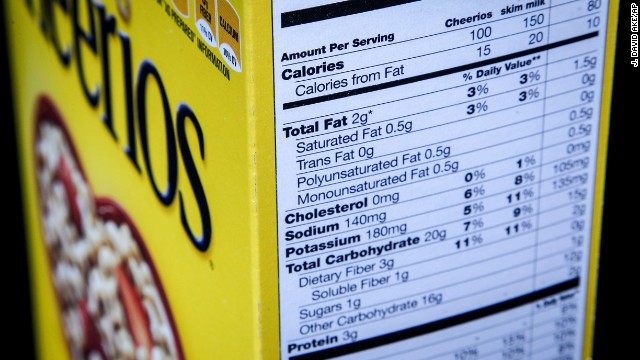
REPOST: Fat, calories, sugar: Nutrition labels getting a makeover

The Food and Drug Administration's priority this year will be to update nutrition labels, which has remained the same for decades.  CNN has the report.
Image Source: www.cnn.com
(CNN) -- Choosing healthier snacks may soon be easier.
The Food and Drug Administration says that updating nutrition labels is a priority this year, although it's unclear when the labels will change.
The labels have remained pretty much the same for decades. It wasn't until the late 1960s that most food labels listed any nutrition information at all.
At the time, labels with calorie or sodium counts were mainly used on products the FDA considered to have "special dietary uses" -- for people with high blood pressure who were watching sodium, for instance.
Most people were making meals at home then, so there wasn't a huge demand for this information. That changed as more people started eating processed foods.
Noticing the trend, the White House pulled together a conference of nutritionists and food manufacturers in 1969. But it wasn't until 1972 that the FDA proposed regulations about what those nutrition labels should show.
Nutrition labeling was voluntary at first. It wasn't until 1990 that the FDA required nutrition labels for most prepared and packaged foods. Labels for raw produce and fish remains voluntary.
"It's time to update (labels) to make (them) easier for consumers to use," said Margo Wootan, director of nutrition policy for the Center for Science in the Public Interest.
The nonprofit organization advocates for better safety and nutrition information in the food industry.
"This is a chance to make (the labels) better and help make it easier for people to choose healthier options," Wootan said.
There's been a shift in shoppers' priorities as nutrition is better understood, and people now have a better idea of what they should watch on a label, the FDA said.
The focus has been on fat content; now nutritionists say calorie counting may be more important and should be broken down better for consumers.
The Center for Science in the Public Interest gave the FDA its wish list for these labels. It wants a label that will emphasize calorie counts, perhaps in a bigger or bolder font size or in a number highlighted in some way.
The organization would also like added sugar to get its own line on labels. Studies show many Americans eat more sugar than they realize. Our bodies don't need sugar to function, according to the American Heart Association.
Right now, it's hard to know what's natural sugar and what's added from reading a label. Manufactures are allowed to combine the two.
The heart association recommends you limit added sugar to no more than half of the daily discretionary calories you're supposed to have. That means for American men, about 150 calories a day or nine teaspoons. For women it's a smaller amount -- no more than 100 calories per day from added sugar, or about six teaspoons of sugar.
The Center for Science in the Public Interest would also like to limit the amount of math you now have to do when counting calories. If you have ever looked at a label and realize you've eaten twice the serving size, you'll appreciate that request.
The organization also hopes to make the ingredient lists larger with better spacing.
More Americans are interested in what's on these food labels. The U.S. Department of Agriculture noticed a statistically significant jump in a study it released this month.
The study showed 42% of working-age adults between 29 and 68 looked at these labels most of the time when shopping, or even said they always did. Some 57% of Americans older than 68 did as well.
In a 2007 USDA study, 34% of working-age adults looked at the label, and 51% of Americans older than 68 did.
The increase is good news as the United States struggles with an obesity epidemic. More than a third of all Americans are obese, according to the Centers for Disease Control and Prevention.
Some studies have shown that people who read labels eat healthier. One 2005 study of African-American shoppers in North Carolina found that to be true. A 2012 study of college students in Minnesota saw similar results.
Annie Joubran is a health and nutrition enthusiast.  Learn more about her career in this Facebook page.

Wednesday, December 11, 2013

Feed a cold, starve a fever: The truth behind the medical proverb

I often hear the phrase, “Feed a cold, starve a fever” whenever I’m having stuck-in-bed blues due to cold or fever. I’ve managed to stick to this proverb in my recent bout with the flu and it somehow helped me get through my manic days. I don’t know if that’s the real reason, but it’s intuitive sense to eat when you have a cold since the condition could weaken the body for days. It’s also rational to starve while running a fever considering it could lower one’s appetite for a day or two and makes fasting relatively feasible.

Image Source: www.flickr.com


My curiosity has introduced me to an enormous body of research aiming to verify this medical maxim. Among the highlights of my inquiry are:

• A 2002 study confirms that the old wives got it right after all. The researchers discovered that a person’s nutritional status has significant effect on the regulation of immune response.
Infection-induced appetite is a behavior intended to prevent pathogen invasion. In layman’s terms, decreased appetite due to fever helps boost the immune system, which is the body’s main line of defense against disease-causing microorganisms.

Image Source: www.askmen.com
 
• While this study suggests that calorie restriction (CR) in mice and rats has been found to decrease the occurrence of tumors and extend their life span by 20 to 30 percent, it also underlines that mice and rats are better off eating when it comes to flu. The researchers also noted that little is known about CR and cancer incidence in humans.

Image Source: www.farmersalmanac.com


After a day of researching, I’ve come to terms with the fact that the medical proverb isn’t as neat as it appears to be. I’ve got literary sources such as Geoffrey Chaucer’s Canterbury Tales and other scientific studies backing the claim that the proverb doesn’t quite qualify as a doctor’s advice.

Got some interesting news that you want me to cover? Get in touch with me, Annie Joubran, on this Facebook page.