Showing posts with label nutrition. Show all posts

Tuesday, August 4, 2015

The American Diet: Have Our Eating Habits Finally Changed?

Pizzas, burgers, soda, and hot dogs. All these food items are ubiquitous in the American diet. Unfortunately, none of these is healthy and can even beef up the risks for developing deadly diseases like stroke and cancer. But with hundreds of programs meddling in the contents of a typical American’s plate, is the country finally eating right?

Image source: hollylegare.com

New reports indicate a sustained decline of calorie intake for the last few years. Soda consumption posted the greatest drop record of more than 25 percent for the average American. The awareness for the effects of unhealthy food consumption began in the late 1990s, thanks to the explosion of scientific research that found the American diet culpable of the obesity epidemic and other malnutrition-related diseases. 

The consumption of high-calorie foods peaked in the early 2000s. Calorie reduction means lower incidences of obesity, which is one of the leading causes (and its associated conditions) of death in the country.

Figures, however, vary from various study groups, which take into account age, gender, and income class. The improvement is most pronounced in the middle to high-income population and among young adults and middle-age citizens. Male and female groups have little disparity between them.

Images source: dosomething.org

While the bad eating habits of the country are somewhat being reined, still more than a third of American adults are still considered obese and many others overweight. The statistics can be discouraging, although we are finally seeded on a positive nutrition position (in general) for a brighter and healthier future.

For more discussions and links to nutrition-related topics, follow me on Twitter. I’m Annie Joubran, your partner in physical wellness.

Saturday, April 25, 2015

REPOST: Pregnancy diets and early years nutrition: spreading the word

Encouraging women to follow a certain dietary program during pregnancy and breastfeeding is crucial to the good health of the child and his or her early-life development. Read the article below for more on the benefits of pregnancy and breastfeeding nutrition plans:

A mother’s diet during pregnancy and in the first few months post-birth is vital for her child’s development and wellbeing. So why isn’t the message getting through to everyone?


Flour power: the tendency to graze and eat on the hoof means children can grow up unaware of the social and nutritional importance of home-cooked food. | Image source: theguardian.com

What’s the best way to improve the health of Britain? For participants at a recent Guardian roundtable, the answer was simple: improve the nutritional health of pregnant women and young children, and the benefits will roll down through the generations.

How to make that improvement was more complicated, although participants at the Danone Nutricia Early Life Nutrition-sponsored roundtable were optimistic that it is possible.

There was broad agreement that opportunities to put out positive messages to parents and parents-to-be were being lost, and one change that would make a huge difference was to encourage better collaboration between government and the food industry. But this partnership was either not happening, or, when it did happen, was being undermined by media negativity.

“Government and industry need to work much more closely together – however, the problem is that we’ve not developed trust in the industry,” said Paul Gately, professor of exercise and obesity at Leeds Beckett University.

“At the moment it’s easy for the media to drive a wedge. We need dialogue and debate so industry and government can work collaboratively.” It was, he said, “one of the shames of the past decade that we’ve not addressed the issue”. Where companies run healthy eating initiatives they are overwhelmingly positive, said Gately.

Helen Crichton of Danone Nutricia Early Life Nutrition said her organisation was one of 780 partners signed up to the Department of Health’s Public Health Responsibility Deal, a commitment to improve nutrition and health. However, in doing so companies such as Crichton’s set themselves up to be criticised, even when they’re prepared to take a positive and active stance.

So how could better collaboration make a difference? Various speakers criticised the fact that healthy eating messages were often negative: eat less red meat, or less sugar, or cut down on calories. But positive messages were more likely to be effective. “The industry talks about benefits not problems, and that’s where collaboration could really start to have some impact,” said Gately.

Participants returned, time and again, to the fact that nutrition – so much a feature of life in Britain during the second world war – had since been dramatically downgraded. Food and its production was not given sufficient emphasis in school or at home.

Richard Marsh, chief executive of the Institute for Food, Brain and Behaviour, noted that as a nation we tend to see health as “pharma-centred” rather than nutrition-centred, despite the fact that better nutrition could have a far greater impact on health than popping pills.

The sheer enjoyment of food and eating together was also being lost; eating on the hoof and grazing was undoubtedly having an effect on children’s eating habits, taste preferences and behaviours, said Crichton.

Ella’s Kitchen founder Paul Lindley said: “Food is what brings people together, but they’re not eating together very often and very young children aren’t learning the art of conversation or the joy of eating with others.”

Improving the diet of pregnant women was one of the most effective ways to change the health of the population, participants agreed. Good nutrition is crucial to early brain formation. However, according to a study by Alberta Pregnancy Outcomes and Nutrition, only 27% of women during pregnancy and 25% of women at three months post-birth meet the current EU recommendation for DHA (docosahexaenoic acid, an omega-3 fatty acid). This is essential for neurological development – embryos in utero and newborns cannot make their own and so are dependent on obtaining the nutrient via their mother through the placenta or breast milk.

Supporting women to eat well during pregnancy and breastfeeding was especially important because early-life nutrition is so complex that it is not well understood, even by professionals. “Infant nutrition is a highly complicated issue,” said Gately. “In my field, obesity, we tend not to get involved before the age of five because it’s our view that we don’t know enough about it to start tinkering around with issues when we don’t know what the outcome will be.”

Despite the problems, some participants mentioned examples of good practice. Lucy Cooke, honorary senior research associate at University College London, said she knew of nurseries where young children helped grow vegetables and were then able to taste them at snack time. Crichton said there is a new qualification for nursery chefs, available in some London colleges, to equip them to menu plan and cook for small children.

One major area of concern at the roundtable was that public health messages tend not to be universally effective, with disadvantaged and vulnerable groups being consistently hard to reach. What that meant in practice, said Gately, was that messages on, for example, child obesity were very successful in general terms, but when you look at the figures more closely it’s clear that disadvantaged groups aren’t taking them on board. Too often, participants agreed, messages about healthy eating and nutrition were only taken on board by the people least in need of them – the “worried well”.

“I’m really worried about that group of people who are hard to reach,” said Cooke. “Messages are lapped up by the middle classes, but it’s how you reach the proportion of the population who are vulnerable that’s important. I don’t see any sign of anyone taking it seriously. There may be stirrings, but there’s an awful lot to do.”

Even where nutrition was taken seriously, and public health messages were issued, they were too often inconsistent, or even contradictory. One solution would be to create a system, similar to that used in Canada, whereby any new public health message had to be filtered through a central point. If the next government could do just one thing to improve the nation’s nutrition, said paediatric dietician Judy More, this should be it.

Also key, More said, was informing newly pregnant women of the importance of nutrition and providing them with the correct information. On both counts, midwives and GPs were failing. Nutrition wasn’t being mentioned at early antenatal appointments – often, she said, because women were overweight and midwives didn’t want their relationship with them to get off to a bad start by talking about what would obviously be a difficult topic. She also lamented the fact that there was very little in the way of training on nutrition for either GPs, or later on in a child’s life, many messages were shrouded in confusion and there was a lack of willingness to take a lead on proper advice.

“There’s a lot of confusion over breastfeeding,” said Cooke. “The Department of Health says breastfeed to six months, but baby foods say 4-6 months on the jar.” More agreed. The fact was, she said, that from a health visitor’s point of view it was easier to give out the straightforward message that babies should be weaned from six months, but actually the “right” time was when a mother felt the baby was ready, and there was no harm in weaning from four months.

“There’s an inconsistency and no one really wants to take responsibility for giving advice,” said Lindley. “When is the right time to wean? What foods should you give?” These questions really matter, he pointed out, for the child’s long-term as well as short-term health. “The earlier children have vegetables, the more likely they are to like vegetables when they’re older,” he said. Confusion over whether to wean at four or six months was causing all sorts of problems, and advice at this crucial moment should be made much clearer.


Visit this Annie Joubran Twitter page to know more about healthy living, dieting, and proper nutrition.

Saturday, January 25, 2014

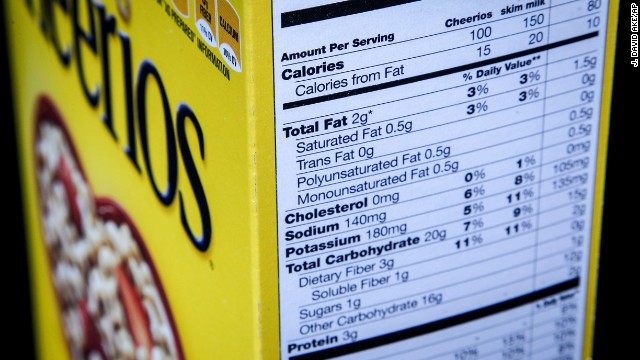
REPOST: Fat, calories, sugar: Nutrition labels getting a makeover

The Food and Drug Administration's priority this year will be to update nutrition labels, which has remained the same for decades.  CNN has the report.
Image Source: www.cnn.com
(CNN) -- Choosing healthier snacks may soon be easier.
The Food and Drug Administration says that updating nutrition labels is a priority this year, although it's unclear when the labels will change.
The labels have remained pretty much the same for decades. It wasn't until the late 1960s that most food labels listed any nutrition information at all.
At the time, labels with calorie or sodium counts were mainly used on products the FDA considered to have "special dietary uses" -- for people with high blood pressure who were watching sodium, for instance.
Most people were making meals at home then, so there wasn't a huge demand for this information. That changed as more people started eating processed foods.
Noticing the trend, the White House pulled together a conference of nutritionists and food manufacturers in 1969. But it wasn't until 1972 that the FDA proposed regulations about what those nutrition labels should show.
Nutrition labeling was voluntary at first. It wasn't until 1990 that the FDA required nutrition labels for most prepared and packaged foods. Labels for raw produce and fish remains voluntary.
"It's time to update (labels) to make (them) easier for consumers to use," said Margo Wootan, director of nutrition policy for the Center for Science in the Public Interest.
The nonprofit organization advocates for better safety and nutrition information in the food industry.
"This is a chance to make (the labels) better and help make it easier for people to choose healthier options," Wootan said.
There's been a shift in shoppers' priorities as nutrition is better understood, and people now have a better idea of what they should watch on a label, the FDA said.
The focus has been on fat content; now nutritionists say calorie counting may be more important and should be broken down better for consumers.
The Center for Science in the Public Interest gave the FDA its wish list for these labels. It wants a label that will emphasize calorie counts, perhaps in a bigger or bolder font size or in a number highlighted in some way.
The organization would also like added sugar to get its own line on labels. Studies show many Americans eat more sugar than they realize. Our bodies don't need sugar to function, according to the American Heart Association.
Right now, it's hard to know what's natural sugar and what's added from reading a label. Manufactures are allowed to combine the two.
The heart association recommends you limit added sugar to no more than half of the daily discretionary calories you're supposed to have. That means for American men, about 150 calories a day or nine teaspoons. For women it's a smaller amount -- no more than 100 calories per day from added sugar, or about six teaspoons of sugar.
The Center for Science in the Public Interest would also like to limit the amount of math you now have to do when counting calories. If you have ever looked at a label and realize you've eaten twice the serving size, you'll appreciate that request.
The organization also hopes to make the ingredient lists larger with better spacing.
More Americans are interested in what's on these food labels. The U.S. Department of Agriculture noticed a statistically significant jump in a study it released this month.
The study showed 42% of working-age adults between 29 and 68 looked at these labels most of the time when shopping, or even said they always did. Some 57% of Americans older than 68 did as well.
In a 2007 USDA study, 34% of working-age adults looked at the label, and 51% of Americans older than 68 did.
The increase is good news as the United States struggles with an obesity epidemic. More than a third of all Americans are obese, according to the Centers for Disease Control and Prevention.
Some studies have shown that people who read labels eat healthier. One 2005 study of African-American shoppers in North Carolina found that to be true. A 2012 study of college students in Minnesota saw similar results.
Annie Joubran is a health and nutrition enthusiast.  Learn more about her career in this Facebook page.